About a month ago, Patrick Jarenwattananon of NPR's
A Blog Supreme put together a group of lists of recent gateway jazz albums from prominent young jazz enthusiasts and bloggers. The
Jazz Now Project was a rather brilliant idea and opened up a lot of discussion and awareness about the future of jazz and really shows what the field looks like right now. Early on the the culmination of this project, Jarenwattananon opened the submission of suggestions not only to those he specifically asked but also to other readers of the blog and on the email list. So it didn't take me long for me to submit
my own Jazz Now list. (And special thanks to him for linking the post on the compilation of Jazz Now submissions. I got my highest hit count yet of 29 readers because of him. I really need more readers.) When I emailed him the link to my blog for submission, Jarenwattananon thanked me for my list and mentioned that I was the only black guy to have sent anything. He figured that this may have been because of those he asked, the only active jazz bloggers he knew were mostly white guys. He wondered if I had any ideas why that was. The question stuck in my head for quite a while and while trying to figure it out, I threw the question out on Twitter the other day about where the black jazz bloggers are. The only response
someone could come up with was the Washington D.C. blogger, Willard Jenkins of
The Independent Ear. Jenkins in fact has his own series on his blog in which he interviews black jazz writers. The "Ain't But a Few of Us: Black jazz writers tell their story" series, while interesting reading, still lacks youth. Jarenwattananon replied that he was aware of Jenkins and even met him but as it relates to the Millennial Generation, there aren't any black jazz bloggers that come to mind.
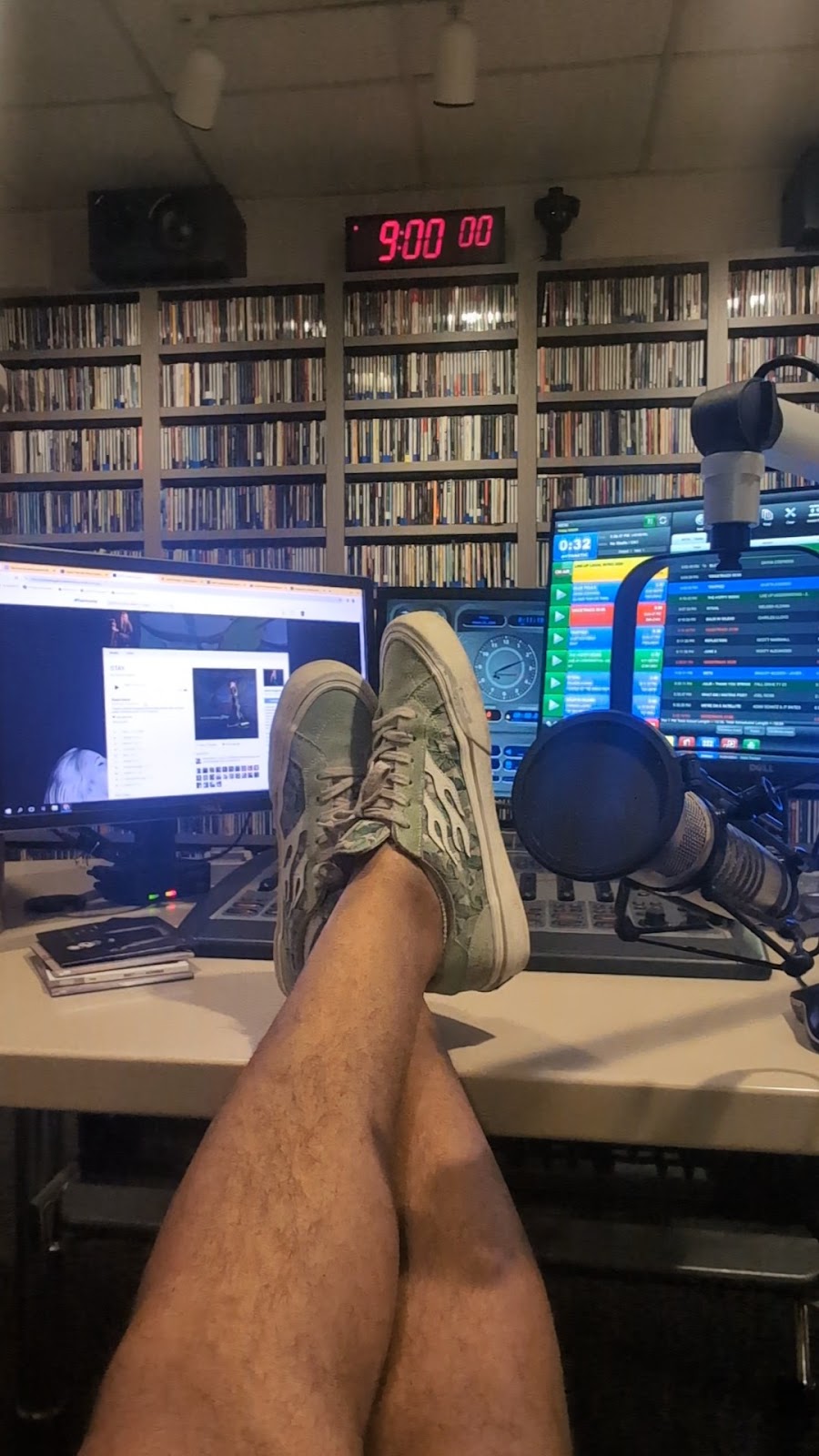
It's weird thinking about that, which is part of the reason why I've been writing more about jazz lately. I may in fact be filling a desperately needed niche out there (and will have to work quite hard to do it justice). My aforementioned "first love after Jesus" could use a spokesman from my specific demographic but I have to seriously ask, "Am I really it?" Call it my low self-esteem but when folks give me compliments, I honestly don't think I can adequately live up to them. When I first started my radio show,
The Line-Up at
KRTU San Antonio (I shall continue to plug this thing), a friend of mine wrote
a blogpost promoting the show on a friend's
blog for their band,
Tendaberry (which rocks, it rocks quite hard). In this blog, I was described as
Retro is probably the foremost authority on jazz music that any of us know, so we'll just say that he's the foremost authority on jazz period in our generation.
Now, of course I am both black and southern. I am not averse to hyperbole. Besides, the folks at Tendaberry are good friends, of course, they're going to speak praisingly of me. That's what friends do. But the aforementioned Jarenwattananon knows
way more about jazz than I do. At my radio station, there are plenty of people with whom I work who make me feel like an idiot just being around them (although,
the guy there who humbles me the most there is just barely a Gen-Xer with a serious vigor to him). I've always described my archival knowledge of jazz as impressive only to people who know nothing about the subject. I can be easily eclipsed by a real expert, but I'm still on the road to writing in
publications about jazz in San Antonio and seeing where else it can take me down the pike (stay prayerful that one of my plans pan out, this plan is kept guarded with Wil Wheaton "crazy awesome"-type secrecy). So, unless my unemployment bubble (which should also change soon, Insha'Allah) is blinding me of something, am I really the foremost African-American Millennial Generation jazz blogger in the seventh largest city in America (and the only one in this specific group that is paying attention to National Public Radio's online efforts)? I can't be it.
So if I'm really it, there has to be a reason why. I know there's someone out there smarter than me. There has to be someone just as interested in jazz as I am and willing to talk about it on the internet with much more frequency than what I'm doing right now. But if you were to look at the demographic breakdown of those who work at my radio station, I've only seen two black people with shows, and I'm one of them. The other is a guy in his 50's who plays a two-hour contemporary jazz show on Sunday afternoons called "
Sunday Best." (In the couple of times in which I've met the host, Neil Phelps, he seems like cool people, though.) Most of the young people who work at KRTU are DJing shows in the rock-oriented after 10pm programming. If you're to look at the demographics of the station, the KRTU Operations Manual and Policy Guide states,
Member (donor) information and market data tells us that the median age of our audience is around 53 - right smack dab in the middle of the 45-60 demographic - and that they are largely well-educated, middle-to-upper class professionals.
After that, we'll have to look at the national scale of jazz. There recently haven't been a shortage of that kind of observation. For ease, I'll link to sites that have given commentary and have their own links. Of course, this summer has been ablaze with
Terry Teachout's article in the Wall Street Journal claiming that jazz can't be saved. Destination-Out has some good commentary about that in a
recent post highlighting Alice Coltrane. While Teachout states that the jazz audience is growing older and smaller, many across the internet claim this isn't so. But the best,
most accepting answer comes from Darcy James Argue (who I recently
very highly praised) in which he says of course the audience is growing older and smaller. You'd have to be blind not to notice that. But the best course of action is to do what you can as an artist to make the work appealing and wide reaching to a new audience so it remains relevant to the public and the current audience must fervently support the art it so dearly loves and for which it heaps tons of internet rage upon its opponents.
So even if the NEA could use a better survey, it's pretty clear that the jazz audience is growing smaller and older. There are some who are making their strides to change this and welcome changes they are. But if you were to go with the law of averages here, if you have an audience that doesn't embrace technology as much and there are fewer people involved, there are lower chances that there will be a blogger in the midst. That's just a straight numbers game. I'm not saying counting bloggers is a zero-sum equation or something, but I am saying if
the average blogger is 36-years-old and you are part of an audience that's crowding out its folks who are Gen-Xers and younger, you're possibly crowding out your bloggers. If the average blogger makes less money than the general adult population, but the jazz audience is middle-to-upper class professionals, you're crowding out your bloggers. A
1995 National Endowment of the Arts study [pdf] states,
...The audience remains predominantly white. White Americans make up 81 percent of the jazz attenders, 78 percent of those watching jazz on television or listening to jazz recordings, and 79 percent ofthose listening to jazz on the radio. This simply reflects the numerical predominance of whites in the population. African Americans, who account for 11 percent of the population as a whole, make up 17 percent of jazz attenders, 18 percent of the radio audience, 19 percent of the television audience, and nearly 20 percent of those who listen to jazz recordings. The remainder (2 to 3 percent) is accounted for by the category "other" (Asians, Native Americans).
Yet while that same study says blacks are one and one half times more likely to participate in jazz events, jazz is still rather proliferated by whites to a large degree (pardon the Mos Def-ism with rock music parallels). I'm not doubting the footing that black people continue to make in jazz. I still sing praises of Joe Sample. Stanley Clarke is getting back in gear. Earl Klugh was recently featured in
JazzTimes. Robert Glasper, Stefon Harris, Christian McBride, those darn Marsalises, Esperanza Spalding, Jaspects, Jef Lee Johnson, Joshua Redman, etcetera etcetera etcetera. Call it a matter of numbers or fighting an ongoing sea change but noting the sheer numbers involved in comparing how many black jazz musicians there are verses how many white jazz musicians there are can get rather dizzying. Finding the reason why after that can get even worse. But when you get right down to it, this does seem like quite a lot a white people for a black-invented art form, even if it is "America's classical music." With numbers like these, it does seem like this could also be crowding out the bloggers.
If there are young black jazz bloggers out there, maybe they just don't pay attention to NPR. I certainly wasn't before this past summer and apparently that was just me bucking the numbers. A
recent demographic study of NPR [pdf] shows 86% of NPR's listeners are white. Blacks make up 5% of NPR's audience (and 31% of jazz listeners). Throw in the
debated idea that
NPR's music choices don't appeal to black people and maybe this question was brought about because Jarenwattananon's internet circles and the white elephant of a more prominent young black jazz blogger just happened to be like two ships passing in the night.
Either way, when you look at the numbers involved, I could just be part of a rare breed. This of course concerns me because it means I'm rather lonely in my tastes. It could be cool to be a kind of authority but it doesn't help when you don't feel qualified enough to be authoritative. The criteria can't be as minimal as "intermediate knowledge and enough motivation to keep learning," can it? Is it like the time I was in an African Methodist Episcopal church with
a friend of mine and I noted that I'd be a catch to any young black woman because I'm a black man with a college degree in a church and I treat my mother right. Is that enough to overlook my inability to drive and my unemployment?
In the meantime, I'll try to be the most adequate 23-year-old black jazz blogger I can occasionally be. Plus, I do have
a radio show. Chicks dig guys with radio shows, right?